
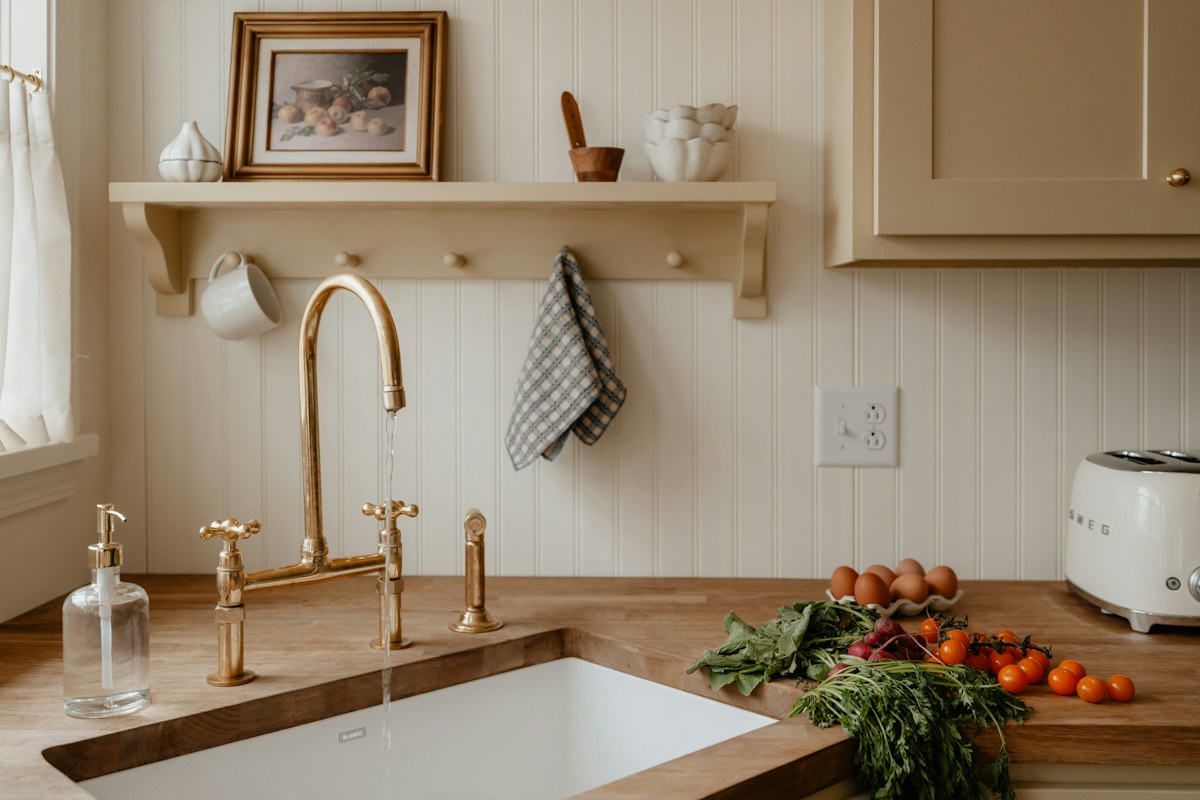
The finish is the easy part of choosing a kitchen tap. The less visible details decide whether it suits the water system, fits the sink and leaves room for everyday use.
Before ordering a replacement or adding a tap to a new kitchen plan, send the exact model to the installer. A photograph of the style does not show its pressure requirements, connections or fixing details.
Check the water system before the shopping basket
Ask for the proposed tap to be checked against the hot and cold supplies at the property. Do not assume a tall spout, a familiar brand or a good result at another home means the same model will suit yours.
WaterSafe explains that pressure can vary with the property’s location, type and height, demand and time of day. Its description of the water supplier’s service standard relates to the supply boundary, not a promise of performance at every kitchen fitting.
If the existing tap has poor flow, describe what happens before choosing a replacement: hot, cold or both; constant or intermittent; one outlet or others too. Ask for the cause to be assessed. Buying a different tap is not, by itself, a diagnosis or a guaranteed improvement.
Read the technical sheet for the exact model
A useful product sheet gives more than the overall height. Look for system suitability, operating pressure requirements, inlet connections, mounting arrangement and fitting dimensions.
For example, Bristan’s Maple Easyfit Mono Sink Mixer technical sheet specifies those details, including worktop depth and pressure information. It also explains that listed flow rates are indicative and can differ with the plumbing system and flow regulators. This is an example of what to check, not a recommendation that this particular tap suits every kitchen.
Keep the product code with the plan. Similar-looking taps and different versions in a range should not be treated as interchangeable without checking their specifications.
Check the sink, the window and the cupboard below
Put the proposed tap on the sink drawing and ask the installer to confirm the mounting details. Include the sink’s tap holes, worktop or sink thickness where it mounts, spout reach and the space needed to operate the handle.
Think through the movement too. Can the window open? Does the handle have room against the splashback? Can the spout move as intended without meeting a shelf or another fitting?
Under the sink, include the waste, isolation points, storage and any equipment already planned. If the model has a pull-out hose, ask what clear space its mechanism needs. A cupboard organised around a bin still needs to accommodate the selected tap and plumbing.
Separate a replacement from a wider alteration
Make the quotation clear about what stays and what changes. Is it a tap replacement on a retained sink, or are the sink, worktop and pipework changing too? Ask what assessment, connections, testing and making good are included, and what would need a further decision.
For a kitchen refit in a South West London flat, give the installer any relevant access or water-isolation arrangements for the building. These details belong in the brief before the fitting visit. They are not a reason to operate shared controls without agreement.
Send the model and the brief together
For kitchen installation and refurbishment, send OSPM your postcode, supplier plan and tap product code before the final order. For a separate plumbing enquiry, describe the current issue and whether the existing sink is staying.
Tell us what you want to replace so we can discuss the scope and information needed for the next step. Choose the finish you like, then confirm the details that let it work in your kitchen.
Have a project in mind?
Send OSPM your postcode, a description of the work and your preferred timing.
Tell us about your property